Evolution of Genome Editing

Updated: Aug 21, 2024

Genome editing has undergone a remarkable transformation over the past few decades, revolutionizing our ability to modify genetic material with unprecedented precision. From the early days of molecular manipulation to today’s cutting-edge technologies, let’s explore the evolution of genome editing tools and the Nobel Prize-winning breakthroughs that have shaped this dynamic field.
1.Zinc Finger Nucleases (ZFNs)

In the early 1990s, researchers began to develop the Zinc Finger Nucleases (ZFNs) concept, with significant contributions from Carleton Gaj and David P. Joung. By the early 2000s, ZFNs had become a pioneering tool for genome editing. These artificial nucleases combine zinc finger DNA-binding domains with a DNA-cleaving domain, allowing for targeted DNA modifications. ZFNs laid the groundwork for subsequent genome editing technologies but were complex to design and implement.
2. Transcription Activator-Like Effector Nucleases (TALENs)

In 2011, Jeffrey C. Berg and David M. B. Cox introduced Transcription Activator-Like Effector Nucleases (TALENs). This technology improved upon ZFNs by utilizing transcription activator-like effectors (TALEs) to recognize specific DNA sequences, coupled with a nuclease for making precise cuts. TALENs provided greater flexibility and accuracy compared to earlier methods, making them a valuable tool for genetic research.
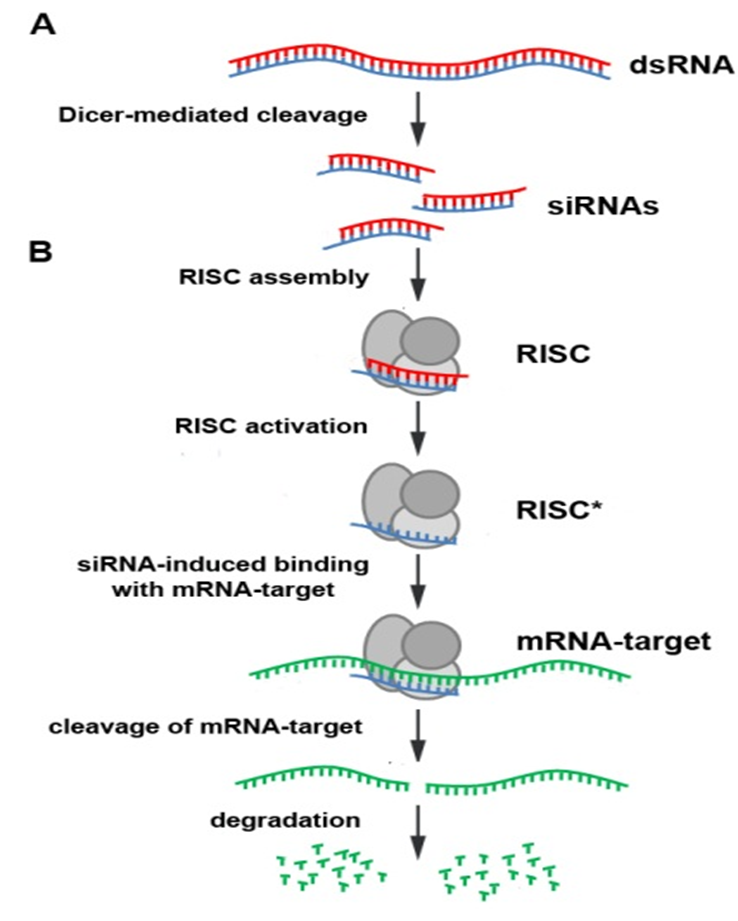
3. RNA Interference (siRNA)


Andrew Z. Fire and Craig C. Mello (Nobel Prize in Physiology or Medicine, 2006) for their discovery of RNA interference.
The concept of RNA interference (RNAi), including small interfering RNAs (siRNAs), was elucidated by Andrew Z. Fire and Craig C. Mello, who were awarded the Nobel Prize in Physiology or Medicine in 2006. Their discovery revealed how RNAi can regulate gene expression by targeting and degrading specific mRNA molecules. This breakthrough has not only enhanced our understanding of gene regulation but also paved the way for therapeutic applications targeting gene silencing.
5. CRISPR/Cas9


Jennifer Doudna and Emmanuelle Charpentier (Nobel Prize in Chemistry, 2020) for their development of the CRISPR/Cas9 genome editing technology.
A groundbreaking advancement came in 2012 when Jennifer Doudna and Emmanuelle Charpentier developed the CRISPR/Cas9 system, which they were awarded the Nobel Prize in Chemistry for in 2020. CRISPR/Cas9 uses a guide RNA to direct the Cas9 nuclease to specific DNA sequences, where it introduces double-strand breaks. This system has revolutionized genetic engineering due to its precision, ease of use, and versatility. The Nobel Prize recognized how this technology has transformed research and therapeutic applications.
References:
1.Doudna, J. A., & Charpentier, E. (2020). The CRISPR-Cas9 technology for genome editing. Science, 346(6213), 1258096.
2.Jinek, M., et al. (2012). A programmable dual-RNA–guided DNA endonuclease in adaptive bacterial immunity. Science, 337(6096), 816-821.
3.Fire, A., et al. (2006). Potent and specific genetic interference by double-stranded RNA in Caenorhabditis elegans. Nature, 391(6669), 806-811
4.Miller, J. C., et al. (2011). A TALE nuclease architecture for efficient genome editing. Nature Biotechnology, 29(2), 143-148.
5.Anzalone, A. V., et al. (2019). Search-and-replace genome editing without double-strand breaks or donor DNA. Nature, 576(7785), 149-157.


Comments