Navigating the Web of Cell Death Through Oxidative Stress

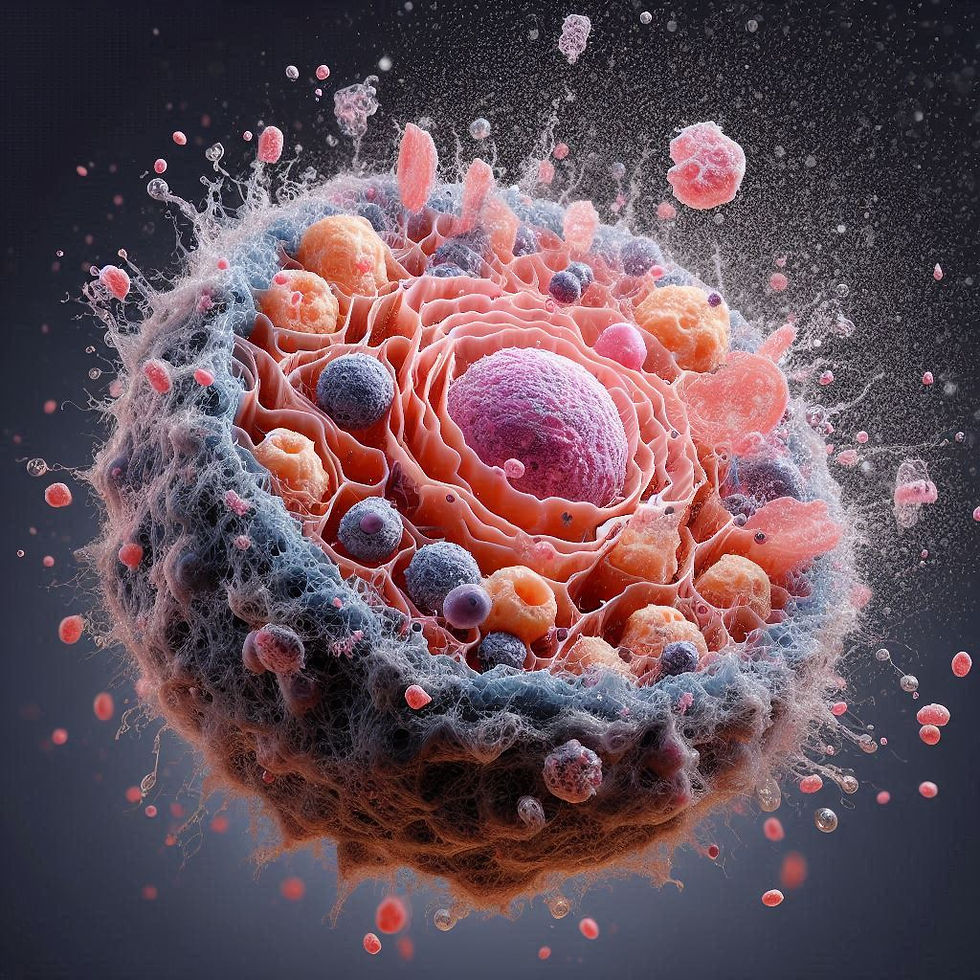
Several cell death pathways are linked to oxidative stress, each with distinct mechanisms and roles in maintaining tissue homeostasis or driving the disease. These pathways include apoptosis, necrosis, ferroptosis, oxytosis, pyroptosis, and autophagy-related cell death. While all of these pathways can be triggered or modulated by oxidative stress, their molecular mechanisms, outcomes, and cellular signals differ.

Pathway | Trigger by Oxidative Stress | Key Features | Inflammatory Response | Mechanism |
Apoptosis | DNA damage, ROS accumulation | Caspase activation, controlled cell death | Non-inflammatory | Intrinsic and extrinsic pathways via caspases |
Necrosis | Overwhelming oxidative stress, trauma | Uncontrolled, cell swelling, rupture | Inflammatory | Unregulated, passive cell death |
Ferroptosis | Iron-dependent lipid peroxidation | Iron, lipid peroxides, glutathione depletion | Non-inflammatory | GPX4 inhibition, lipid ROS damage |
Oxytosis | Glutathione depletion, ROS in neurons | Neuron-specific, calcium dysregulation | Non-inflammatory | GSH depletion, ROS and calcium influx |
Pyroptosis | ROS activating inflammasomes | Caspase-1, gasdermin D, inflammatory cytokines | Highly inflammatory | Inflammasome activation, cytokine release |
Necroptosis | RIPK1/RIPK3 activation by ROS RIPK1/RIPK3 activation by ROS | RIPK3, MLKL, membrane rupture | Inflammatory | Regulated necrosis via RIPK1, RIPK3, MLKL |
Autophagy-Related Death | Excessive autophagy, ROS | Autophagosome formation, survival mechanism | Non-inflammatory | Degradation of damaged organelles, excessive leads to death |
References
Dixon, S. J., & Stockwell, B. R. (2014). "The role of iron and reactive oxygen species in cell death." Nature Chemical Biology, 10(1), 9-17.DOI: 10.1038/nchembio.1416
Yang, W. S., & Stockwell, B. R. (2016). "Ferroptosis: Death by Lipid Peroxidation." Trends in Cell Biology, 26(3), 165-176.DOI: 10.1016/j.tcb.2015.10.014
Conrad, M., & Pratt, D. A. (2019). "The chemical basis of ferroptosis." Nature Chemical Biology, 15(2), 113-119.DOI: 10.1038/s41589-018-0190-0
Lewerenz, J., & Maher, P. (2015). "Chronic Glutamate Toxicity in Neurodegenerative Diseases—What is the Evidence?" Frontiers in Neuroscience, 9, 469.DOI: 10.3389/fnins.2015.00469
Linkermann, A., & Green, D. R. (2014). "Necroptosis." New England Journal of Medicine, 370(5), 455-465.DOI: 10.1056/NEJMra1310050
Fulda, S. (2010). "Evasion of apoptosis as a cellular stress response in cancer." International Journal of Cell Biology, 2010, 370835.DOI: 10.1155/2010/370835


Comments